

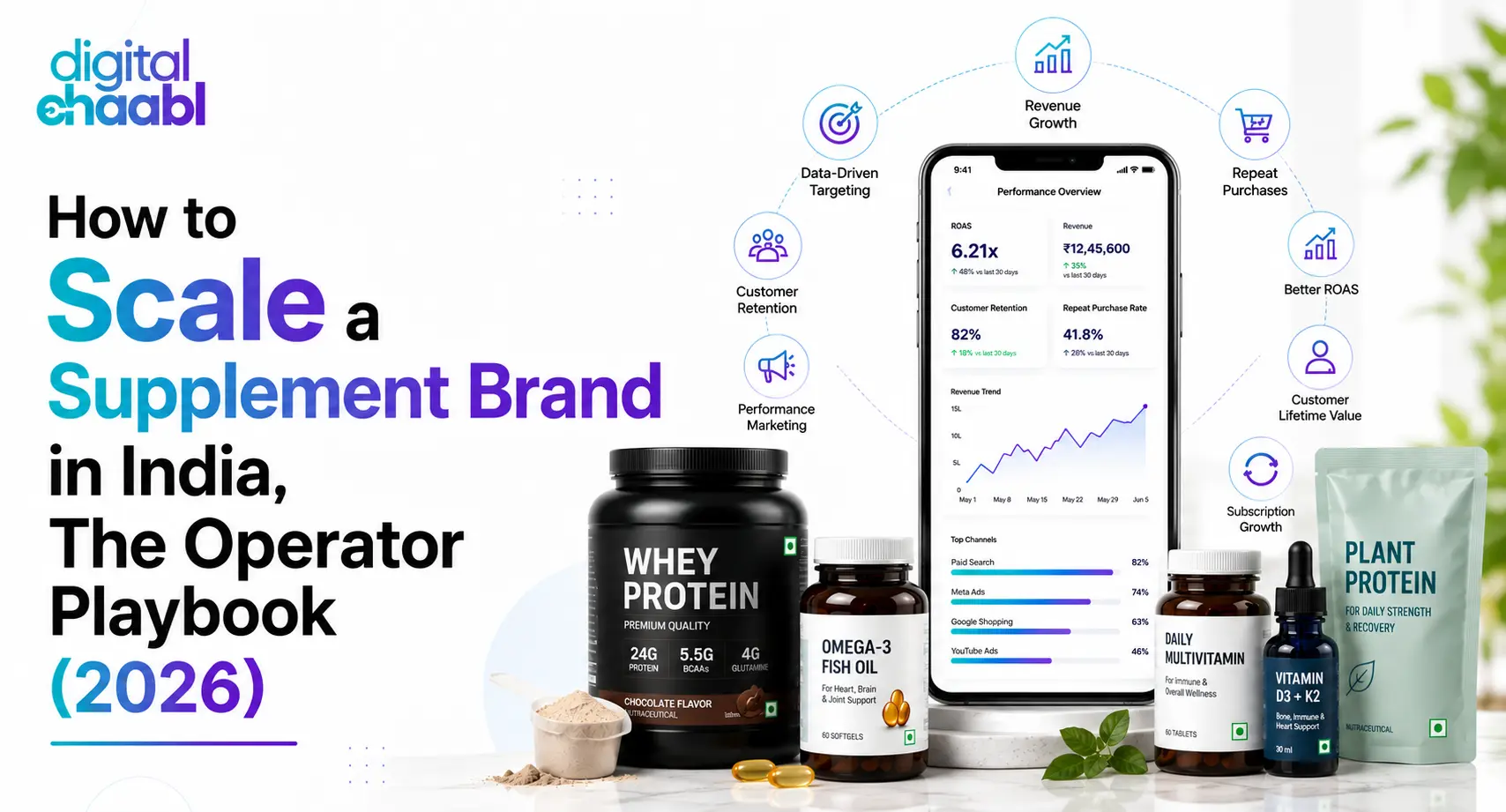
It’s almost 1 AM and I keep thinking about a founder I spoke to last month. Doing decent numbers. Ads were “working.” ROAS looked fine on the dashboard. And yet, every time I asked about his bank balance, he got quiet. That quiet tells you everything about how to scale a supplement brand in India the wrong way.
Here’s the direct answer, since you probably don’t have time for a slow build-up tonight either: scaling a supplement brand in India isn’t about more ad spend or more SKUs, it’s about fixing your backend (RTO, COGS, repeat purchase) before you pour money into growth. Spend without systems just scales the leak.
Okay. Let me actually unpack that, because I know it sounds like a LinkedIn quote and I don’t want it to land like one.

Why “Scaling” Usually Means Scaling the Problem
Most founders think scale is a top-line word. More orders, more reach, more spend. But if your unit economics are broken at ₹10L a month, they don’t magically fix themselves at ₹50L a month.
They just get louder. I’ve seen this play out almost identically across the supplement business in India, whey, multivitamins, gut health, doesn’t matter the category, the margin leak is rarely the product. It’s almost always somewhere boring. Returns. Bad COD. A courier partner nobody’s audited in eight months.
So before we even talk about how to scale a supplement brand in India, we have to talk about what scaling actually multiplies. It multiplies whatever is already true about your business. Good systems, good scale. Broken systems, broken scale, just bigger.
The RTO Problem Nobody Wants to Talk About
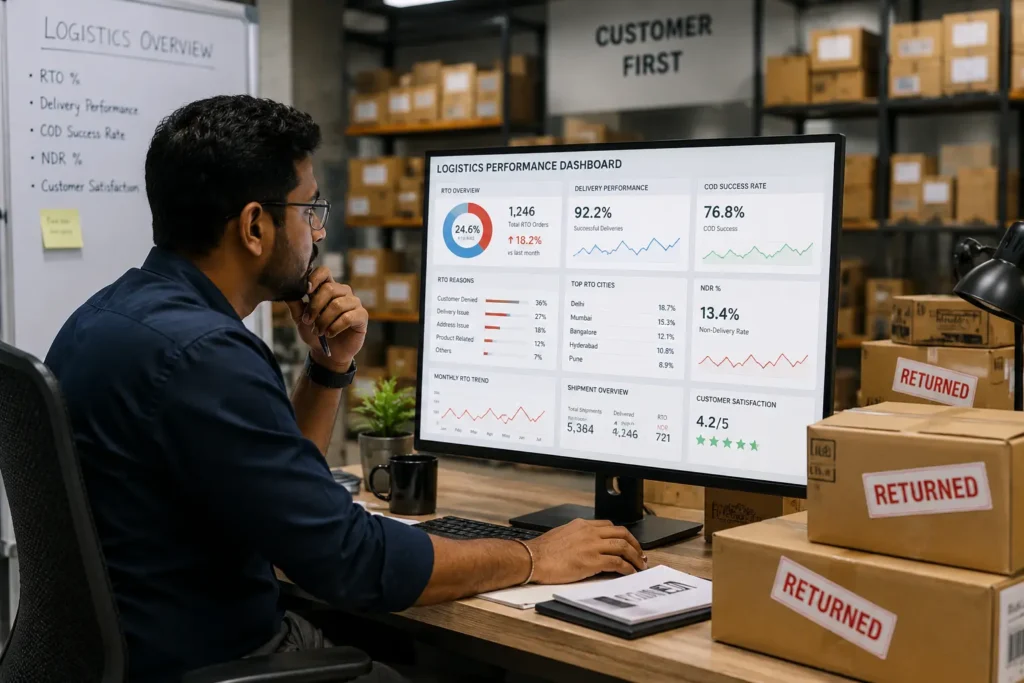
Supplements get returned a lot. Wrong flavor, “didn’t like the taste,” delayed delivery so the customer cancelled at the door. In India this isn’t a footnote, for some D2C wellness brands, RTO and returns quietly eat 20–30% of revenue. Nobody puts that on a pitch deck.
If you’re trying to figure out how to scale a supplement brand in India and you haven’t audited your RTO numbers in the last 90 days, that’s the actual starting point. Not creative testing. Not a new influencer deal. The leak first.
What Actually Moves the Needle When You Scale
I don’t think there’s one move. There’s a sequence. And it’s less glamorous than most “growth hacks” content makes it sound.
1. Fix the Backend Before the Front End
This is the unsexy part. Before you touch ad creative, look at your delivery partner performance city by city. Look at your COD-to-prepaid ratio. A supplement business in India running 70% COD with high RTO zones is bleeding money it thinks ads are making.
We’ve walked through this exact audit with brands at Digital Chaabi, and almost every time, the backend tells a different story than the ad dashboard does.
2. Treat Repeat Purchase Like It’s the Whole Business
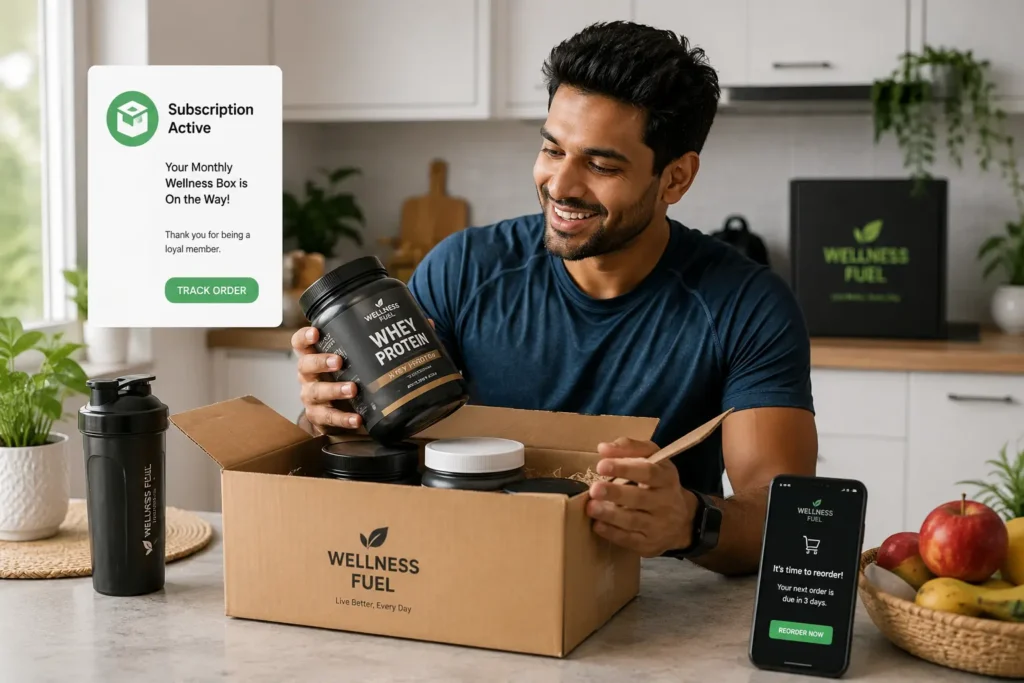
Supplements are inherently repeat-purchase products, that’s the gift of this category, honestly, if you don’t waste it. A first-time buyer at full CAC is rarely profitable on order one. Your second and third order is where the math turns.
So when you’re thinking about scaling a D2C supplement brand, ask: what’s pulling people back at day 25 when the bottle’s about to run out? If the answer is “nothing yet,” fix that before adding spend.
3. Get Honest About ROAS vs. Net Profit
This one’s personal for me to write, not gonna pretend otherwise. ROAS is a vanity number if it’s the only number you’re looking at. 4x ROAS with 25% RTO and thin margins can still mean you’re losing money on every campaign. Real scale tracks contribution margin per order, not just blended ROAS on a screenshot.
Building the Brand Foundation to Scale a Supplement Brand in India
Numbers aside, and I know I just spent three sections on numbers, there’s a brand layer too. How to start a supplement brand in India and how to build a supplement brand that lasts are slightly different questions, but they touch here: trust. Supplements are a trust category. People are putting it in their body.
Your packaging, your FSSAI compliance, your third-party testing, these aren’t decoration, they’re conversion drivers. A brand that skips this to “move fast” usually pays for it later in returns and reviews, which loops right back to the RTO problem above. Everything in this category is connected like that. Funny how it works.
If you want a deeper breakdown on the brand-building side specifically, we wrote more on how to build a supplement brand that’s worth a slower read when you have the headspace for it.
Is Owning a Supplement Store Profitable While You Scale a Supplement Brand in India?
Short version, yes, but margins are thinner than people assume once you account for returns, COD losses, and platform fees if you’re selling through marketplaces too. The brands that stay profitable while scaling a nutraceutical brand in India are the ones treating logistics and manufacturing cost as seriously as marketing.
We’ve covered margin structures for supplement brands in more depth if numbers are your thing at this hour too.
A Quiet Note on Manufacturing and Private Label
A lot of founders ask about supplement manufacturing in India early, should I go private label, should I build my own facility. Early on, private label supplements almost always makes sense. It keeps capital free for the things that actually need testing: positioning, retention, your first thousand customers.
Building your own manufacturing is a Series B problem, not a Day 1 problem, in most cases. We get into this more in our piece on private label vs. owned manufacturing if you’re at that fork in the road.
The Part Where I Tell You to Slow Down
This is the part of the playbook nobody puts in the title. To actually scale, you sometimes have to slow down first. Audit before you spend. Fix before you grow.
It feels counterintuitive when investors or your own ambition is pushing you to move faster, but the founders who scale a supplement brand in India sustainably are usually the ones who paused for thirty days to look under the hood before adding another rupee of ad spend. Slow is smoother. Smoother is faster, eventually.
If this is where you are right now, decent revenue, unclear profit, gut feeling something’s leaking, that’s worth a real conversation, not another article. Book a Discovery Call with Digital Chaabi and we’ll map the leak before suggesting anything. No pitch, just the diagnosis.
FAQs
Q1. How to Scale a Supplement Brand in India Successfully?
Start by auditing RTO, COD losses, and repeat purchase rate before increasing ad spend. Scaling a broken system just makes the losses bigger, faster.
Q2. How to Start and Scale a Supplement Brand in India?
Get FSSAI compliance sorted, choose private label manufacturing to start, and validate demand with a small batch before investing in scale. Trust-building matters as much as the product itself.
Q3.Is owning a supplement store profitable while you scale a supplement brand in India?
Yes, but margins shrink fast if RTO, COD, and logistics aren’t managed tightly. Profitability depends more on backend systems than on marketing spend.
Q4. How to Build and Scale a Supplement Brand in India?
Build around trust and repeat purchase from day one, certifications, consistent quality, and a retention plan for the second and third order, not just the first sale.
Q5. What is the biggest mistake brands make when trying to Scale a Supplement Brand in India?
The biggest mistake when trying to Scale a Supplement Brand in India is increasing ad spend before fixing backend issues like RTO rates, COD losses, customer retention, and profit margins. Many brands focus on acquiring more customers while ignoring operational leaks that reduce profitability. Sustainable growth comes from optimizing fulfillment, improving repeat purchase rates, and strengthening unit economics before investing heavily in marketing.