

Wellness brand marketing agency searches are increasing rapidly because wellness businesses in 2026 are competing in one of the most emotionally driven ecommerce industries online. From supplements and skincare to fitness products, Ayurveda, self-care brands, and holistic wellness startups — almost every company today is trying to capture customer attention in a market that became extremely crowded.
And honestly… customers became tired of generic wellness marketing.
Everywhere they look, they see:
- exaggerated transformation claims
- influencer promotions
- “miracle” wellness products
- aggressive advertising campaigns
repeating endlessly.
That’s why people don’t trust wellness brands instantly anymore.
They research carefully before purchasing:
- ingredients
- reviews
- brand credibility
- expert opinions
- customer experiences
Sometimes customers spend days researching a product before finally placing an order.
Which means modern wellness brands need much more than attractive packaging or paid ads.
They need trust-focused growth systems.
And that’s exactly why businesses are actively searching for a strong wellness brand marketing agency that understands ecommerce psychology, customer trust, SEO visibility, AI-search discoverability, and long-term brand growth together.
Why Wellness Marketing Feels Different
Wellness products are emotional purchases.
People buying:
- supplements
- skincare
- wellness products
- self-care solutions
- nutrition products
- fitness recovery products
are usually not purchasing casually.
Underneath the transaction, they’re often looking for:
- confidence
- better health
- recovery
- energy
- self-improvement
- peace of mind
That emotional layer changes how marketing works completely.
A random aggressive campaign may create visibility temporarily, but sustainable wellness brands usually grow through:
- trust
- education
- consistency
- customer connection
A skilled wellness brand marketing agency understands that wellness ecommerce cannot scale sustainably through hype alone anymore.
Because customers became too aware.
Why Wellness Brands Are Struggling With Growth
A few years ago, many wellness companies scaled rapidly through:
- influencer marketing
- Instagram advertising
- discount campaigns
Now growth became much harder because:
- acquisition costs increased
- competition exploded
- customers became skeptical
- AI-search behavior changed
That means wellness brands now require integrated systems around:
- SEO services
- conversion optimization
- retention marketing
- educational content
- AI-search discoverability
instead of depending only on advertising campaigns.
And honestly, many wellness brands still use outdated ecommerce strategies designed for older consumer behavior.
That’s why scaling feels inconsistent even when marketing budgets increase.
Why SEO Services Became Essential for Wellness Brands
Modern wellness customers constantly search:
- supplement comparisons
- skincare advice
- ingredient benefits
- wellness routines
- product reviews
- self-care solutions
That’s why strong SEO services became one of the most valuable growth channels for wellness ecommerce brands.
Good SEO helps brands:
- improve organic visibility
- attract high-intent customers
- reduce paid acquisition dependency
- increase AI-search discoverability
- build authority over time
And honestly, wellness customers arriving through search usually trust brands differently because they discovered them while actively researching solutions.
That changes conversion behavior significantly.
A smart wellness brand marketing agency should understand how to combine:
- SEO
- content strategy
- ecommerce optimization
- customer trust systems
instead of treating them separately.
Why Trust Became the Real Currency in Wellness Ecommerce
This matters deeply now.
Customers buying wellness products online constantly wonder:
- Is this genuine?
- Is this safe?
- Does this actually work?
- Can I trust this brand?
That means wellness brands must build:
- transparency
- authority
- educational visibility
- authentic communication
through every customer touchpoint.
Modern digital marketing for ecommerce inside the wellness industry is no longer just about visibility.
It’s about reducing skepticism.
And honestly, brands that fail to build trust usually struggle with retention even if their advertising campaigns initially perform well.
What a Wellness Brand Marketing Agency Actually Does
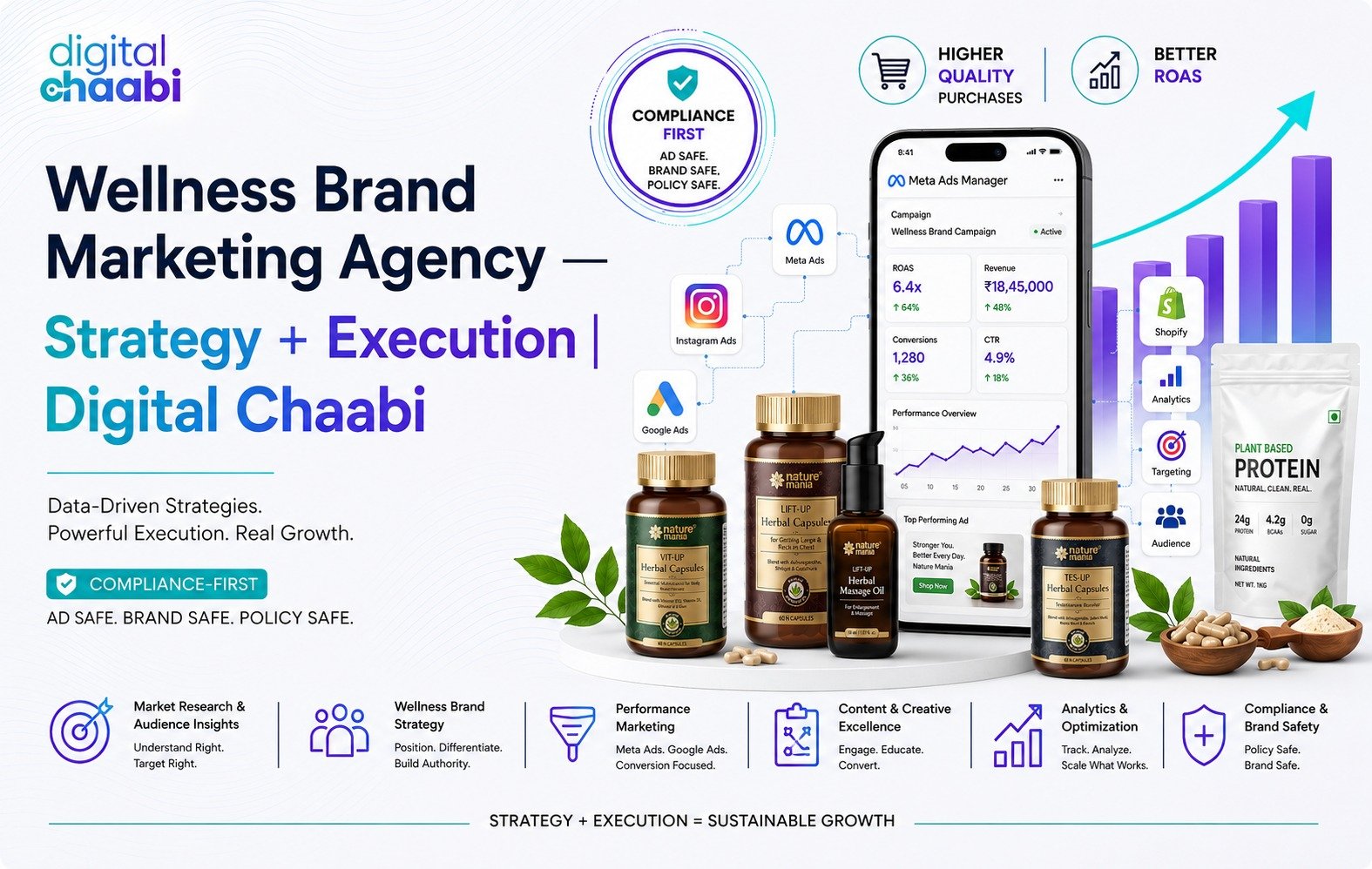
A professional wellness brand marketing agency helps businesses build scalable ecommerce growth systems across:
- SEO
- paid advertising
- ecommerce optimization
- conversion systems
- AI-search visibility
- retention marketing
- educational content strategy
The goal is not simply generating traffic.
The goal is building:
- customer trust
- profitable acquisition
- repeat purchases
- long-term brand loyalty
- sustainable revenue growth
Because wellness brands survive through retention and customer confidence.
Not temporary hype.
Why Strategy + Execution Both Matter
Many wellness brands fail because they focus only on:
- branding
or - advertising
Without connecting the full growth system properly.
A strategic wellness brand marketing agency works on:
- customer psychology
- positioning
- messaging
- acquisition systems
- retention
- conversion optimization
While also executing:
- SEO
- paid ads
- funnels
- landing pages
- content systems
Because strategy without execution creates no growth.
And execution without strategy creates inconsistent growth.
Modern wellness ecommerce requires both together.
Why Educational Content Became Essential
Customers want education now.
Especially in wellness industries.
Before purchasing products, customers often consume:
- blogs
- YouTube explanations
- ingredient comparisons
- expert guidance
- AI-generated recommendations
That’s why educational content became central to wellness SEO services and ecommerce growth systems.
Educational content helps:
- answer customer doubts
- improve organic visibility
- build authority
- improve AI-search discoverability
- increase trust
And honestly, wellness brands ignoring educational content now are becoming less visible online every year.
Because search behavior itself changed.
AI Search Changed Wellness Ecommerce Visibility

People no longer depend only on traditional search engines.
Customers now ask:
- ChatGPT
- AI assistants
- conversational search tools
questions like:
- “Best supplements for stress?”
- “Safe skincare routine for oily skin?”
- “Which wellness brand is trustworthy?”
That means modern SEO services now require:
- AEO optimization
- conversational formatting
- AI-search readability
- structured educational content
A modern wellness brand marketing agency should already understand how AI-search ecosystems affect wellness brand discoverability.
Because visibility today exists across multiple search environments simultaneously.
Why Paid Advertising Alone Became Risky
Paid ads still matter heavily.
But wellness advertising became more difficult because:
- competition increased
- ad restrictions tightened
- acquisition costs rose sharply
That’s why sustainable wellness brands now combine:
- SEO
- retention systems
- educational marketing
- ecommerce optimization
- trust-focused branding
instead of relying only on aggressive advertising campaigns.
A strong performance marketing agency understands how these systems support each other.
Because scalable wellness growth now requires infrastructure underneath the ads.
Why CRO Matters for Wellness Brands
Many wellness brands generate traffic successfully but still struggle with:
- abandoned checkouts
- low conversions
- weak customer confidence
That’s where CRO becomes critical.
Conversion optimization improves:
- product pages
- landing pages
- checkout experience
- trust signals
- customer journeys
Because sometimes ecommerce brands don’t actually need more visitors.
They simply need better systems converting the visitors already arriving.
A strategic performance marketing agency understands how small conversion improvements can dramatically improve profitability.
Why Retention Matters More Than Viral Attention
Wellness businesses grow strongest through repeat customers.
That’s why retention systems matter enormously:
- subscriptions
- email flows
- loyalty systems
- wellness communities
- customer education
A strong wellness brand marketing agency focuses heavily on:
- customer lifetime value
- repeat purchases
- retention systems
instead of chasing temporary viral spikes constantly.
Because sustainable wellness growth usually happens through consistency.
Not short-term trends.
Why Smaller Wellness Brands Need Strategic Positioning
Large wellness companies can survive inefficient marketing longer because larger budgets protect them temporarily.
Smaller brands usually cannot.
That’s why smaller wellness businesses need:
- SEO visibility
- trust-focused content
- efficient acquisition
- conversion optimization
much earlier.
A smart wellness brand marketing agency helps smaller brands compete strategically through:
- customer trust
- educational visibility
- search discoverability
- content ecosystems
instead of trying to outspend larger competitors directly.
Why Digital Chaabi Fits Modern Wellness Brand Growth
Platforms like Digital Chaabi increasingly focus on integrated ecommerce growth systems because wellness brands now require support across:
- SEO services
- AI-search discoverability
- ecommerce optimization
- performance marketing
- retention systems
Modern wellness growth depends heavily on systems working together consistently over time.
Because trust compounds slowly.
But once customers trust a wellness brand properly, retention and profitability improve significantly.
Looking for a trusted wellness brand marketing agency that understands scalable SEO services, retention-focused digital marketing for ecommerce, AI-search visibility, conversion optimization, and long-term wellness brand growth? Explore integrated ecommerce growth solutions at Digital Chaabi and build stronger customer trust with smarter wellness marketing systems.
What Wellness Brands Should Prioritize in 2026
If wellness companies want sustainable ecommerce growth, they should prioritize:
- educational content
- SEO visibility
- AI-search discoverability
- customer trust
- retention systems
- conversion optimization
instead of focusing only on short-term advertising spikes.
Because wellness ecommerce today became a long-term trust ecosystem.
And honestly, customers can recognize authentic wellness brands much faster than businesses realize.
Conclusion
Choosing the right wellness brand marketing agency has become extremely important for wellness ecommerce businesses in 2026. Modern wellness growth now depends heavily on SEO visibility, AI-search discoverability, educational content, conversion optimization, retention systems, and customer trust. The strongest wellness brands today are usually the ones building sustainable growth ecosystems instead of depending only on aggressive advertising campaigns.
Because customers buying wellness products are not simply purchasing products anymore.
They’re purchasing reassurance.
Consistency.
Confidence.
And wellness marketing must understand that emotionally — not just strategically.
FAQs
Q1: What does a wellness brand marketing agency do?
A wellness brand marketing agency helps wellness businesses grow through SEO, ecommerce marketing, paid ads, CRO, educational content, and retention systems.
Q2: Why are SEO services important for wellness brands?
SEO services improve organic visibility, AI-search discoverability, educational traffic, and long-term customer acquisition.
Q3: Why is trust important for wellness ecommerce brands?
Customers research wellness products carefully before purchasing, so brands must build authority, transparency, and educational credibility.
Q4: What makes digital marketing for ecommerce different in wellness industries?
Wellness ecommerce marketing focuses heavily on trust-building, educational visibility, customer retention, and conversion optimization.
Q5: Can a performance marketing agency help wellness brands grow?
Yes. A strong performance marketing agency can improve conversions, SEO visibility, retention systems, customer acquisition efficiency, and ecommerce profitability.