

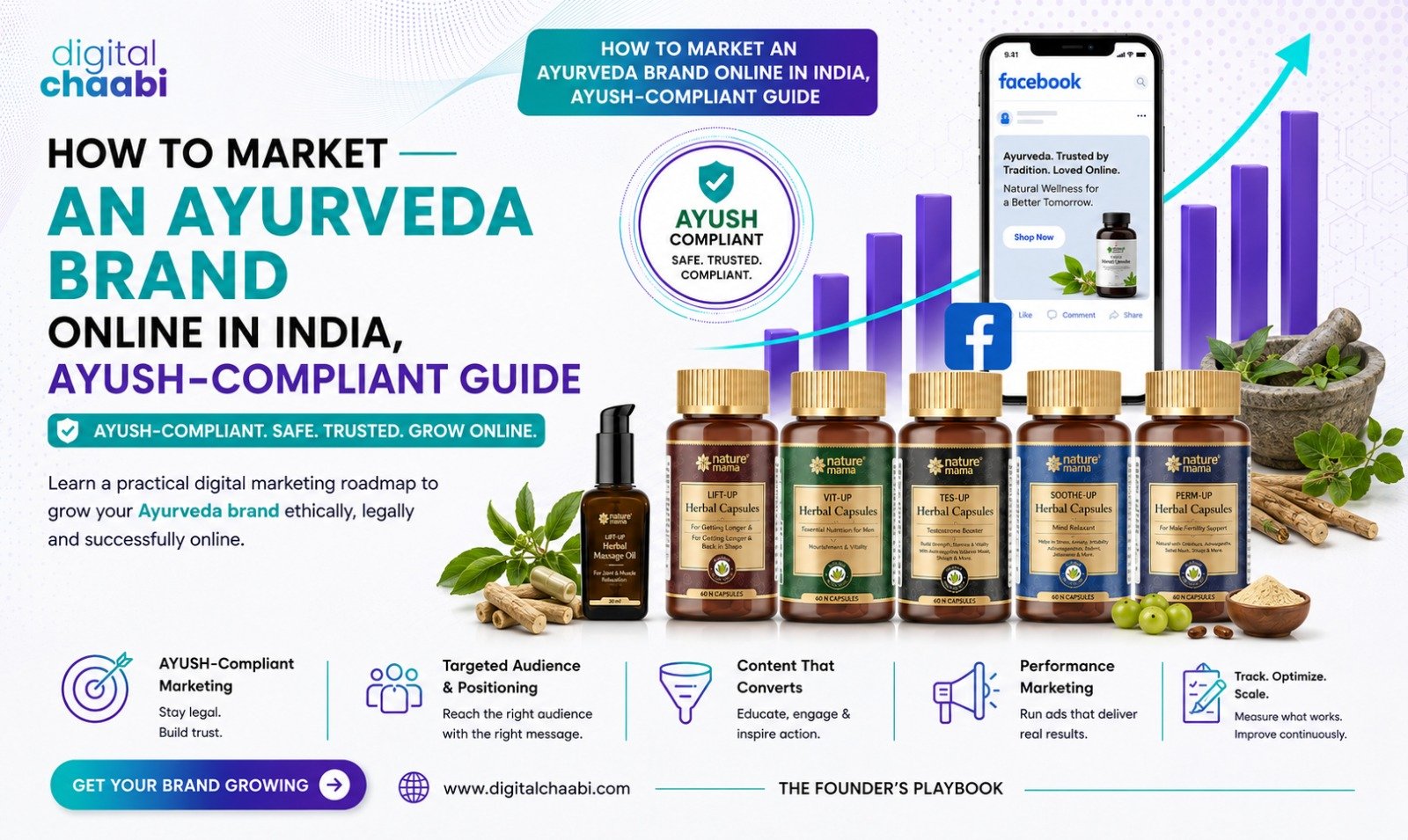
There’s something quietly powerful about Ayurveda as a brand category. It carries centuries of trust. People already believe in it, they grew up with it, their parents swore by it, and now they’re googling it at midnight because they’re tired of synthetic everything.
But here’s the tension. How to market an Ayurveda brand online in India is genuinely complicated, not because the marketing is hard, but because the rules are real and the penalties for getting them wrong are not small. AYUSH regulations exist. Platform ad policies exist. And the brands that try to cut corners with claim-heavy copy eventually pay for it, in takedowns, in ad rejections, in lost consumer trust.
So this guide is two things at once. A practical marketing playbook. And a compliance map. Because you can’t really have one without the other in this space.
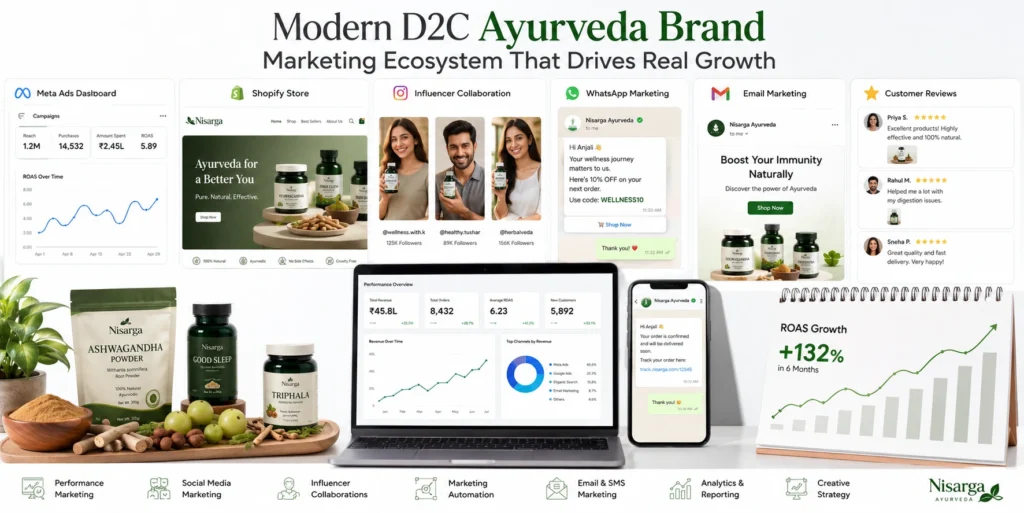
How to Market an Ayurveda Brand Online: Opportunities and Risks
The Indian Ayurveda market is expected to reach Rs. 1.2 lakh crore by 2030. That’s not a niche number. That’s a mainstream shift. Consumers are actively moving toward herbal, natural, and traditional wellness, and they’re doing it online.
Post-2020, search volumes for terms like “Ayurvedic immunity booster,” “natural hair oil India,” and “ashwagandha benefits” exploded. The demand is there. The digital channels are there. The challenge is navigating the space between powerful marketing and responsible claims.
AYUSH, the Ministry of Ayurveda, Yoga & Naturopathy, Unani, Siddha and Homoeopathy, has clear guidelines on what can and cannot be claimed for Ayurvedic products. Violating these isn’t just a legal risk. It’s a brand risk. One viral callout or a regulatory notice and months of brand building can unravel.
How to market an Ayurveda brand online in India the right way means building trust first, transactions second.
Understanding AYUSH Regulations Before You Market an Ayurveda Brand Online
Before strategy, you need to understand what you’re working within.
The Drugs and Magic Remedies (Objectionable Advertisements) Act, 1954, yes, it’s old, but it’s still enforced, prohibits claims that suggest an Ayurvedic product can cure specific diseases. The AYUSH ministry has its own advertising guidelines layered on top of this.
What you cannot claim:
You cannot say your product “cures” diabetes, “treats” arthritis, or “reverses” hair loss. These are disease claims and they’re prohibited regardless of how naturally you word them.
What you can say:
You can talk about traditional use. You can highlight ingredients and their Ayurvedic properties. You can use phrases like “supports immunity,” “traditionally used for,” “helps maintain,” or “promotes wellness.” The language shifts from cure to support, and that shift matters enormously.
This isn’t just legal caution. It’s actually better marketing. Consumers in 2025 are skeptical of overclaiming. A brand that speaks honestly about what its products do, and why, builds more loyalty than one making promises it can’t keep.
Step 1, Build a Brand Identity Rooted in Authenticity
Ayurvedic brand marketing that actually works starts before the first ad. It starts with what you stand for.
The brands winning in this space, think Kapiva, Kama Ayurveda, Forest Essentials at the premium end, aren’t just selling products. They’re selling a philosophy. A return to something older and wiser. That narrative is magnetic, but it only works if it’s real.
Ask yourself: what’s the story behind your formulations? Who makes them? Where do the ingredients come from? Is there a heritage, a lineage, a family recipe that became a brand? These aren’t marketing gimmicks. They’re the foundation of trust in Ayurveda brand marketing.
Your visual identity should reflect this. Earthy tones, clean typography, ingredient photography that’s honest and beautiful. Not clinical. Not overcrowded. The packaging and website design should feel like the brand, grounded, intentional, trustworthy.
Step 2, SEO and Content Marketing for Ayurvedic Brands
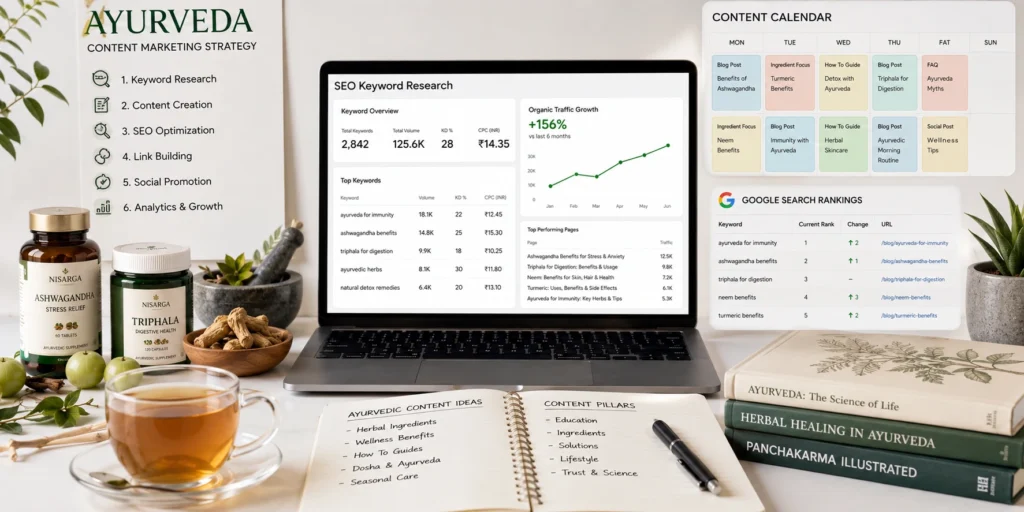
This is the single most underutilized channel for Ayurvedic brands online in India. And the most sustainable.
People are already searching for what you know. “Benefits of triphala,” “how to use ashwagandha,” “best Ayurvedic remedy for sleep”, these are real, high-intent searches with real people behind them. If your brand shows up with genuinely useful, honest content, you earn trust before you ever ask for a sale.
What to write about:
Ingredient deep-dives. Dosha explainers. Seasonal wellness rituals. The science behind traditional formulations. Q&A content that answers what people are genuinely asking. None of this needs to make disease claims, it just needs to be useful and accurate.
The SEO compound effect is real. A blog post written today can bring traffic for three years. Brands like Digital Chaabi help Ayurvedic wellness brands build this kind of content infrastructure, the kind that ranks, educates, and converts without ever crossing a compliance line.
Step 3, Social Media Strategy That Works Within the Rules
Instagram, YouTube, and now Threads, these platforms are where Ayurveda marketing online lives for most brands.
The content that works isn’t the content that shouts the loudest. It’s the content that teaches. A reel explaining why neem works for skin, how to do an oil massage, what adaptogens actually are, this kind of educational content builds audience, earns shares, and positions your brand as a trusted voice.
Formats that perform well:
Short educational reels. Before-and-after ingredient storytelling (not clinical results, ingredient journeys). Founder content, the human behind the brand. Ayurvedic rituals tied to seasons or festivals. User-generated content from real customers sharing their routines.
What doesn’t work: testimonials that imply disease cure. Before-and-after imagery that suggests medical treatment. This is both a compliance issue and a trust issue, platforms will flag it and consumers will question it.
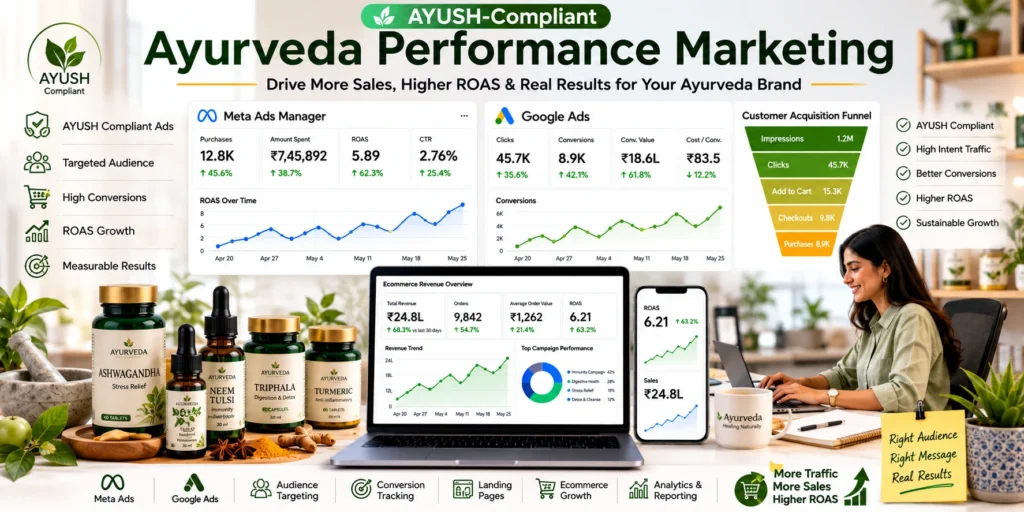
Step 4, Paid Advertising for Ayurvedic Brands, What’s Allowed
Meta and Google both have specific policies around health and wellness advertising. For Ayurvedic product advertising in India, the guardrails are real.
Meta prohibits ads that imply guaranteed results or make before-and-after claims for health products. Google restricts healthcare and medicine-related ads to certified advertisers in certain categories.
What this means practically: your ad creative needs to lead with benefits framed as support, not cure. “Supports healthy digestion” is fine. “Cures acidity” is not. “Made with traditional Ashwagandha” is fine. “Clinically proven to reduce stress” needs evidence and careful platform vetting.
Compliant Ayurvedic product ads that work well: ingredient-led creatives, lifestyle imagery, founder stories, ritual-based messaging. These aren’t workarounds, they’re genuinely stronger ads because they build emotional resonance rather than leaning on claims.
Step 5, Influencer Marketing the Right Way
Influencer marketing for Ayurveda brands is powerful and tricky in equal measure.
The tricky part: influencers who make unauthorized medical claims on behalf of your brand create liability for you. The CCPA (Central Consumer Protection Authority) has issued guidelines on misleading endorsements and influencers are increasingly required to disclose paid partnerships.
The powerful part: the right creator, a yoga teacher, an Ayurvedic practitioner, a wellness educator with a genuine following, can introduce your brand to thousands of people who already trust them.
Brief your influencers carefully. Give them the compliance guardrails clearly. Ask for authentic usage content, not scripted claims. The best influencer partnerships for Ayurvedic brands feel like recommendations from a knowledgeable friend, not a pharma ad AYUSH Advertising Guidelines, Ministry of AYUSH
FAQs About how to market an Ayurveda Brand Online
Q1: How to Market an Ayurveda Brand Online effectively for Ayurvedic products?
Focus on ingredient education, traditional use storytelling, and SEO-driven content. Use social media for awareness and paid ads with compliant, benefit-led messaging. Avoid disease claims entirely, they’re both legally risky and bad for long-term trust.
Q2: How to Market an Ayurveda Brand Online While Selling Ayurvedic Products in India?
Yes, absolutely. You need proper AYUSH/FSSAI licensing depending on your product category, compliant labeling, and a clear returns and shipping policy. Platforms like Amazon, Flipkart, and your own D2C website are all viable channels.
Q3: How the 80/20 Rule Can Improve Your Strategy to Market an Ayurveda Brand Online?
In Ayurveda, the 80/20 principle often refers to diet and digestion, the idea that you should eat to 80% capacity to support optimal digestion and metabolic function. It’s a traditional principle of mitahara (moderate eating) that’s found renewed relevance in modern wellness conversations.
Q4: How to Successfully Market an Ayurveda Brand Online in India?
Promote through education, not just advertising. Content that explains the philosophy, the ingredients, and the lifestyle around Ayurveda builds deeper engagement than product-first ads. Combine SEO, social media education, influencer partnerships with credible voices, and a strong D2C website experience.
Q5: What are the biggest mistakes brands make when they market an Ayurveda brand online?
Common mistakes include making exaggerated health claims, ignoring AYUSH regulations, targeting the wrong audience, neglecting customer reviews, and relying solely on paid ads without building trust through educational content and organic marketing.